
It is normal for children to breathe through their mouth once in a while, especially when they have a cold, allergies, or a stuffy nose. But if your child often sleeps with their mouth open, snores, wakes up tired, or seems to struggle breathing through their nose, it may be worth paying closer attention.
Mouth breathing is not always an orthodontic problem. Sometimes it is related to allergies, enlarged tonsils or adenoids, nasal blockage, or sleep concerns. But long-term mouth breathing can also affect how the jaws, teeth, and bite develop. That is why an orthodontic assessment can be helpful, especially if you are already noticing changes in your child’s smile, bite, or facial growth.
At Royal Orthodontics, we often meet parents who say, “I thought they would grow out of it.” Sometimes children do. Other times, mouth breathing is a sign that something needs to be checked.
Why Do Some Children Breathe Through Their Mouth?
Children may breathe through their mouth for many reasons. Some are temporary, while others continue for months or years.
Common causes can include:
- Seasonal allergies
- Frequent nasal congestion
- Enlarged tonsils or adenoids
- A narrow upper jaw
- Habitual open-mouth posture
- Tongue posture issues
- Sleep-disordered breathing
- Difficulty breathing comfortably through the nose
The key question is whether it happens only during a short illness or whether it has become a regular pattern.
If your child is mouth breathing most nights, snores often, or seems tired even after a full night of sleep, it is a good idea to speak with a healthcare provider. The Mayo Clinic lists mouth breathing, snoring, restless sleep, pauses in breathing, and daytime attention or behaviour changes as possible signs connected with pediatric obstructive sleep apnea.
How Mouth Breathing Can Affect the Teeth and Jaw
When a child breathes through the nose, the lips are usually closed and the tongue rests naturally against the roof of the mouth. This helps support normal jaw and facial development.
When a child breathes through the mouth for a long time, the mouth often stays open and the tongue may sit low. Over time, this may be linked with:
- Narrow upper jaw development
- Crowded teeth
- Open bite
- Crossbite
- Overbite or overjet concerns
- Dry mouth
- Snoring or restless sleep
- Changes in facial growth patterns
This does not mean every child who mouth breathes will need braces or orthodontic treatment. But it does mean the pattern is worth checking, especially during the growing years.
If you are already seeing crowding, bite changes, or jaw growth concerns, our page on treatment for children explains how early orthodontic evaluations can help identify issues before they become more complicated.
Signs Parents Should Watch For
You do not need to diagnose the problem yourself. Just notice the patterns.
Parents may want to book an orthodontic consultation if their child often has:
- Lips apart while resting
- Mouth open during sleep
- Frequent snoring
- Noisy breathing at night
- Dry lips or dry mouth in the morning
- Bad breath despite brushing
- Crowded teeth
- A narrow smile
- Top and bottom teeth that do not meet properly
- A lower jaw that looks set back
- Restless sleep
- Morning headaches
- Trouble focusing during the day
Some of these signs may be medical, some may be orthodontic, and some may involve both. A good first step is to have the concern looked at by the right professionals.
When Should a Child See an Orthodontist?
A child should see an orthodontist if mouth breathing is happening regularly and you are also noticing changes in the teeth, bite, jaw, or sleep quality.
You do not need to wait until all adult teeth come in. In fact, early assessment can be useful because an orthodontist can check how the jaws are growing, how the bite is developing, and whether there may be enough room for adult teeth.
If treatment is not needed right away, that is still helpful information. The orthodontist may simply monitor growth and recommend the right time to begin care if it becomes necessary.
You can also read our blog on the best age to start orthodontic treatment if you are unsure whether your child is too young for an orthodontic visit.
Can Orthodontics Fix Mouth Breathing?
Orthodontics does not “cure” mouth breathing by itself. This is important to say clearly.
If mouth breathing is caused by allergies, enlarged tonsils, enlarged adenoids, or another airway concern, your child may need to be evaluated by a physician, pediatrician, ENT specialist, or sleep specialist. Orthodontics may be one part of the bigger picture, but it is not a replacement for medical diagnosis.
That said, orthodontic treatment may help in selected cases where jaw development or bite issues are contributing to the concern. For example, if a child has a narrow upper jaw, certain orthodontic appliances may be recommended to guide growth and improve space in the mouth. Every child is different, so the right approach depends on the exam, growth pattern, and overall health history.
If your child has been told they may need an appliance, our blog on common orthodontic appliances gives a simple overview of what different appliances do and why they may be used.
What Happens During an Orthodontic Assessment?
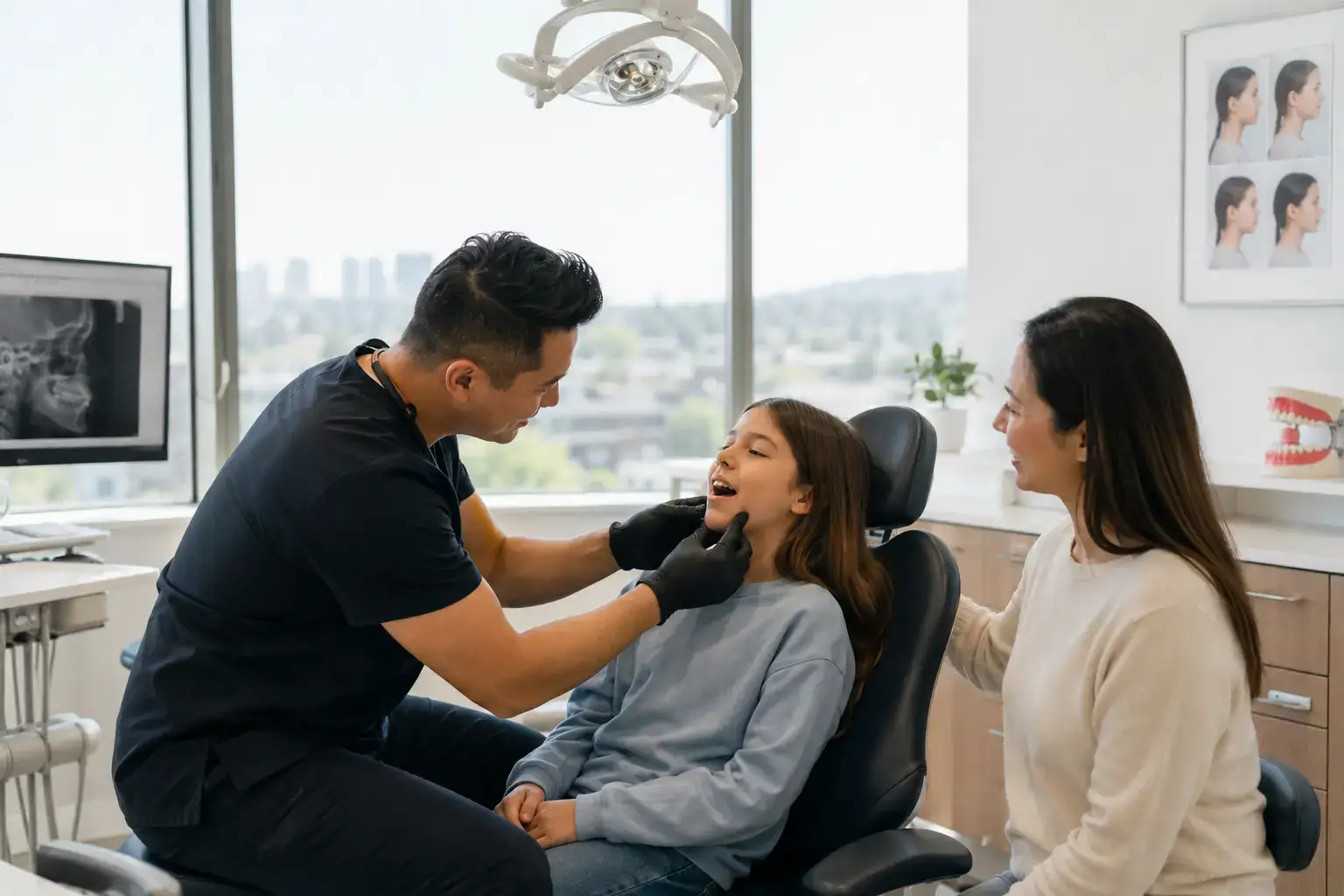
An orthodontic assessment is usually simple and comfortable. The orthodontist looks at your child’s teeth, bite, jaw growth, facial balance, and oral habits. They may also ask questions about sleep, snoring, mouth posture, and whether your child can breathe comfortably through the nose.
Depending on the situation, the orthodontist may recommend:
- Monitoring growth
- Early orthodontic treatment
- A referral to a physician or ENT specialist
- A discussion about airway-related concerns
- Future braces or aligner treatment when the timing is right
If your child is nervous, our first visit page can help you understand what to expect before coming in.
Mouth Breathing and Sleep: When to Take It Seriously
If your child snores once in a while during a cold, that may not be a major concern. But regular snoring, pauses in breathing, gasping, restless sleep, or daytime behaviour changes should not be ignored.
Mayo Clinic notes that children with pediatric obstructive sleep apnea may show signs such as snoring, mouth breathing, restless sleep, difficulty learning, attention problems, and behaviour changes. You can read more from Mayo Clinic about pediatric obstructive sleep apnea symptoms.
Royal Orthodontics also has information about sleep apnea and how airway-related concerns may connect with orthodontic care.
Should Parents Wait and See?
A short wait is reasonable if your child is sick, congested, or dealing with temporary allergies. But if mouth breathing has become the usual way your child breathes, it is better to ask questions early.
Early does not always mean treatment. Sometimes early simply means getting a clear answer.
Parents should consider booking an orthodontic assessment if mouth breathing continues for several weeks or months, especially if it comes with snoring, crowded teeth, bite issues, or poor sleep.
Book an Orthodontic Consultation in Vancouver
If your child breathes through their mouth often, sleeps with their mouth open, snores, or has signs of a developing bite problem, an orthodontic assessment can help you understand what is happening.
At Royal Orthodontics, we take a careful, child-friendly approach. We look at the teeth, bite, jaw growth, and oral habits, then explain your options in plain language.
You can book an appointment with Royal Orthodontics to have your child’s bite and jaw development assessed.
