
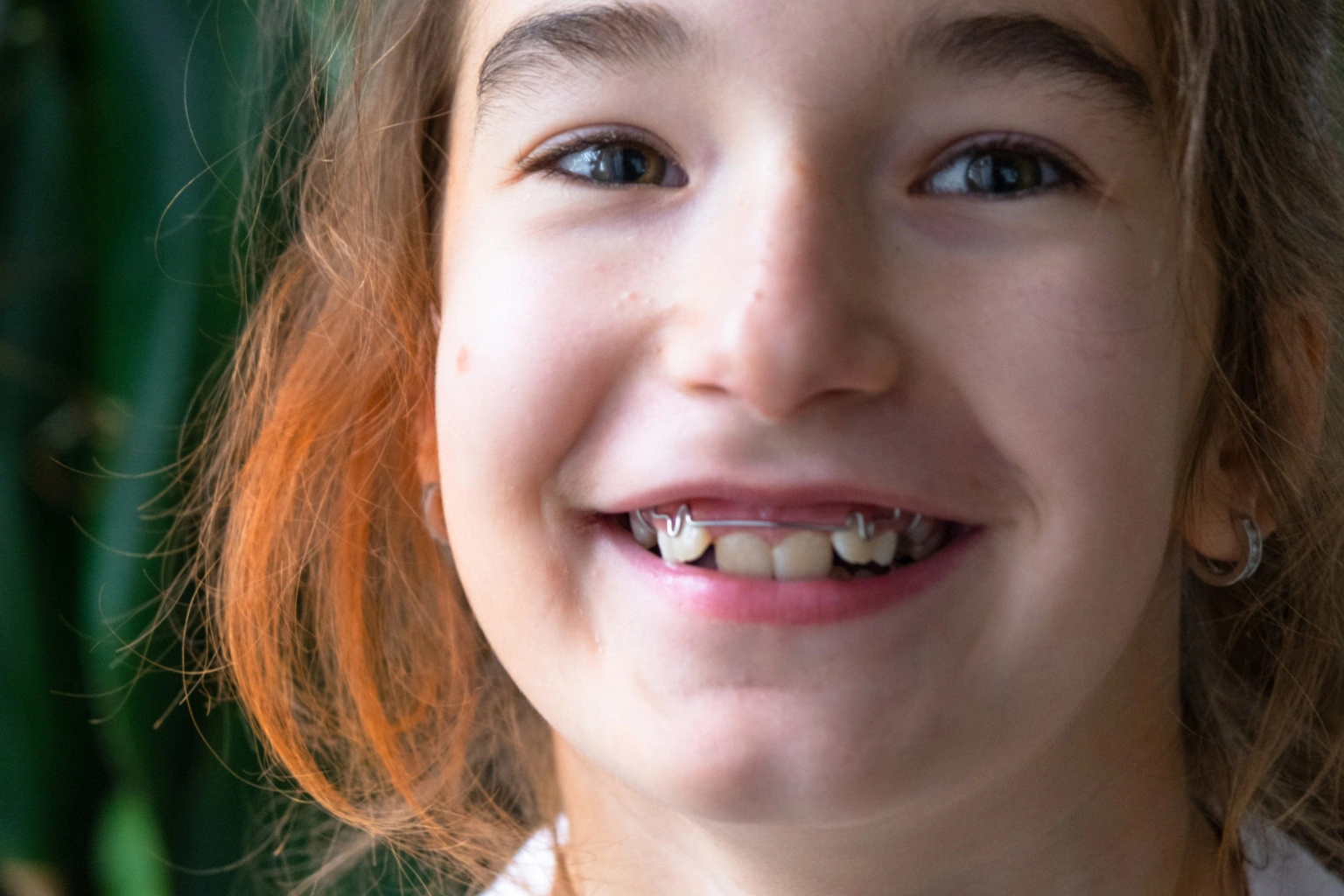
Every child’s smile develops differently. Some children have naturally straight teeth as their permanent teeth come in, while others develop crowding, spacing, or bite concerns that may benefit from an orthodontic assessment.
As a parent, however, it is not always easy to know what is part of normal growth and what may require professional attention.
Some of the signs your child needs orthodontic treatment can be easy to see, such as crowded or noticeably crooked teeth. Others may be less obvious, including mouth breathing, difficulty chewing, speech concerns, or a jaw that shifts when your child closes their mouth.
Recognizing these signs does not necessarily mean that your child needs braces immediately. An early orthodontic evaluation allows an orthodontist to examine how the teeth and jaws are developing, identify potential concerns, and recommend the right time for treatment—if treatment is needed at all.
When Should Your Child First See an Orthodontist?
The American Association of Orthodontists recommends that children receive their first orthodontic screening by approximately age seven. At this age, children usually have a combination of baby teeth and permanent teeth, giving the orthodontist an opportunity to evaluate tooth eruption, jaw growth, spacing, and bite development.
This does not mean every seven-year-old needs braces. In many cases, the orthodontist may simply recommend monitoring the child’s development and checking their progress periodically.
You can learn more in our guide to the best age to start orthodontic treatment.
1. Crowded, Crooked, or Overlapping Teeth
Crowding is one of the most recognizable signs that a child may need orthodontic treatment. It happens when there is not enough room in the jaw for permanent teeth to erupt in their proper positions.
You might notice:
- Teeth growing behind or in front of other teeth
- Permanent teeth erupting at unusual angles
- Teeth twisting as they come in
- Significant overlapping
- Very little room between the teeth
Mild irregularity can sometimes improve as the jaw develops. More significant crowding, however, may make brushing and flossing more difficult and could affect how the upper and lower teeth fit together.
An orthodontist can evaluate whether your child’s mouth is likely to create enough space naturally or whether early guidance may help.
2. Early or Delayed Loss of Baby Teeth
Children do not all lose their baby teeth according to exactly the same schedule. However, teeth that are lost much earlier or later than expected can sometimes affect how permanent teeth emerge.
Early tooth loss may allow nearby teeth to drift into the empty space, potentially leaving insufficient room for the permanent tooth. Delayed loss can sometimes prevent a permanent tooth from erupting in the correct position.
The American Association of Orthodontists includes unusually early or late loss of baby teeth among the signs parents should discuss with an orthodontist.
3. Difficulty Biting or Chewing Food
Your child should generally be able to bite and chew without regularly experiencing pain or difficulty.
Watch for behaviours such as:
- Avoiding firm or chewy foods
- Chewing mainly on one side
- Taking an unusually long time to finish meals
- Complaining that certain teeth hurt when biting
- Struggling to bite through foods with the front teeth
- Frequently biting the cheeks or tongue
These behaviours could be related to the way the upper and lower teeth come together. An orthodontic assessment can determine whether a bite problem is contributing to the difficulty.
4. An Overbite, Underbite, or Crossbite
A healthy bite allows the upper and lower teeth to meet in a balanced and functional way. When the jaws or teeth do not align properly, a child may develop a bite problem.
Overbite
An overbite occurs when the upper front teeth extend too far over the lower teeth. In more noticeable cases, the lower teeth may contact the roof of the mouth, or the upper front teeth may be more vulnerable to injury.
Underbite
An underbite occurs when the lower front teeth sit ahead of the upper front teeth. Because an underbite can be connected to jaw growth, it is often helpful to assess it while a child is still developing.
Crossbite
A crossbite occurs when some upper teeth sit inside the lower teeth rather than outside them. A child with a crossbite may shift their jaw to one side when closing their mouth.
Bite concerns that can sometimes benefit from early evaluation include underbites, crossbites, significant crowding, excessive spacing, and teeth that do not meet normally.
Read more about why bite problems develop and how they may affect children and adults.
5. Mouth Breathing
Occasional mouth breathing during a cold is common. Pay attention when your child regularly breathes through their mouth, especially when they are not congested.
Possible signs include:
- Sleeping with the mouth open
- Frequently having dry or cracked lips
- Snoring or noisy breathing
- Keeping the mouth open while watching television or playing
- Experiencing dry mouth in the morning
- Appearing tired despite getting enough sleep
Mouth breathing can have several possible causes, and orthodontics is only one part of the evaluation. Depending on the situation, the orthodontist may recommend that your child also be assessed by a physician, pediatrician, dentist, or ear, nose and throat specialist.
Learn more about mouth breathing in children and when parents should seek an assessment.
6. Thumb-Sucking or Pacifier Use That Continues Too Long
Thumb-sucking and pacifier use are normal soothing behaviours for babies and young children. When these habits continue as permanent teeth begin developing, however, they may influence tooth position and jaw growth.
Prolonged habits may contribute to:
- Upper front teeth moving forward
- Lower front teeth tipping inward
- An opening between the upper and lower front teeth
- Changes in the shape of the upper jaw
- Difficulty closing the lips comfortably
Parents should avoid making the child feel ashamed or punished. A dentist or orthodontist can recommend age-appropriate, positive strategies for stopping the habit.
7. Teeth That Protrude Noticeably
Upper front teeth that stick out significantly may be more exposed to accidental damage during sports, falls, or everyday play.
Protruding teeth may be related to tooth position, jaw development, oral habits, or a combination of factors. An orthodontist can evaluate the cause and determine whether treatment should begin early or be planned for a later stage.
8. Large Gaps or Unusual Spacing
Some spacing is normal, particularly in younger children. In fact, small spaces between baby teeth may help create room for larger permanent teeth.
An evaluation may be helpful when:
- A gap is especially large
- Several permanent teeth appear to be missing
- Teeth are unusually small
- A permanent tooth has not erupted
- Spacing is noticeably uneven
- A tissue attachment between the front teeth appears prominent
The orthodontist may use an examination and appropriate imaging to understand whether the spacing is temporary or connected to another developmental issue.
9. A Jaw That Shifts, Clicks, or Looks Uneven
Pay attention to how your child opens and closes their mouth. A lower jaw that moves to one side while closing may be compensating for a crossbite or another bite interference.
Other signs can include:
- Clicking or popping in the jaw
- Difficulty opening the mouth fully
- Facial asymmetry
- The chin appearing noticeably off-centre
- Jaw discomfort while chewing
- The child repeatedly moving the jaw to find a comfortable bite
Jaw sounds do not always indicate a serious problem, but recurring discomfort, restricted movement, or visible shifting should be professionally assessed.
10. Speech Difficulties Related to Tooth Position
Speech development is complex, and speech difficulties can have many causes unrelated to orthodontics. However, the position of the teeth, tongue, and jaws can sometimes change how people form certain sounds.
An orthodontic evaluation may be useful when speech concerns occur alongside:
- An open bite
- Significant spacing
- Protruding front teeth
- Difficulty placing the tongue properly
- A noticeable tongue-thrusting habit
An orthodontist does not replace a speech-language pathologist. When appropriate, the two professionals may work together as part of a broader treatment plan.
11. Your Child Is Self-Conscious About Their Smile
Orthodontic treatment is not only about appearance, but a child’s feelings about their smile still matter.
Children may avoid smiling in photographs, cover their mouth while speaking, or become uncomfortable when classmates comment on their teeth. A consultation can help your family understand what treatment options are available and whether this is the appropriate time to begin.
The goal should never be to make a child feel that something is “wrong” with their appearance. Instead, the conversation can focus on oral health, comfort, function, and confidence.
Does Seeing These Signs Mean My Child Needs Braces?
Not necessarily. Some children benefit from early treatment while they still have a mixture of baby and permanent teeth. Others are better served by monitoring their development and waiting until more permanent teeth have erupted.
Depending on your child’s needs, recommendations may include:
- Regular observation appointments
- A space-maintaining appliance
- A palatal expander
- Limited early braces
- Comprehensive braces at a later age
- Clear aligner treatment
- Invisalign First for eligible younger patients
Royal Orthodontics provides orthodontic treatment for children based on each child’s stage of development, bite, jaw growth, and individual needs.
For suitable younger patients, Invisalign First may also be considered as part of early orthodontic treatment. It is designed for children who still have a combination of baby and permanent teeth.
What Happens During Your Child’s Orthodontic Assessment?
Your child’s first appointment is primarily an opportunity to gather information and answer questions. The orthodontist may:
- Examine the teeth, bite, and jaw alignment
- Review how permanent teeth are erupting
- Evaluate facial and jaw growth
- Take photographs, digital scans, or X-rays when appropriate
- Ask about chewing, breathing, oral habits, and dental history
- Explain whether treatment is needed now, later, or possibly not at all
You will also have an opportunity to discuss available treatments, expected timing, and the reasons behind any recommendation.
Read about what to expect during your first visit before bringing your child to the clinic.
Early Evaluation Does Not Always Mean Early Treatment
One of the most important things for parents to understand is that an early assessment does not automatically lead to immediate treatment.
Sometimes, the best recommendation is simply to wait.
Monitoring allows the orthodontist to follow jaw development and tooth eruption so treatment can begin at the most appropriate time. When early treatment is recommended, it is generally because addressing a specific concern during growth may be more effective than waiting until development is further advanced.
Our article on early orthodontic care for children and teens explains how early assessment and treatment timing work.
Schedule an Orthodontic Assessment for Your Child
You do not have to diagnose an orthodontic problem yourself. If you have noticed crowding, unusual tooth eruption, difficulty chewing, mouth breathing, a shifting jaw, or another change in your child’s smile, an orthodontic assessment can provide clear answers.
Royal Orthodontics offers family-friendly orthodontic care for children and teens in West Vancouver, Downtown Vancouver, North Vancouver, and surrounding communities.
Contact Royal Orthodontics to schedule your child’s orthodontic consultation and learn whether treatment is needed now or whether monitoring is the better approach.
Frequently Asked Questions
What are the most common signs that a child needs orthodontic treatment?
Common signs include crowded or overlapping teeth, bite problems, difficulty chewing, early or delayed loss of baby teeth, protruding front teeth, mouth breathing, prolonged thumb-sucking, jaw shifting, and unusual spacing.
At what age should my child see an orthodontist?
Children should generally receive an initial orthodontic screening at around age seven. A child may need to be assessed sooner when there is an obvious bite problem, jaw asymmetry, dental trauma, significant crowding, or difficulty biting and chewing.
Does my child need a dentist’s referral to see an orthodontist?
A referral is generally not required to book an orthodontic consultation at Royal Orthodontics. Parents can contact the clinic directly when they have concerns about their child’s teeth, bite, or jaw development.
Will an early orthodontic assessment mean my child needs braces?
No. Many children who receive an early assessment do not begin treatment immediately. The orthodontist may recommend monitoring growth and tooth eruption until the timing is right.
Can children use Invisalign instead of braces?
Some children may qualify for Invisalign First or another clear-aligner treatment. Suitability depends on the child’s age, dental development, type of orthodontic concern, and ability to wear the aligners as directed.
